
Lucas County City Directory Collections
For historical directory work, the principal keeper is the Toledo-Lucas County Public Library Local History and Genealogy Department. Its Toledo holdings begin in 1858 and continue to the present. This is a Toledo collection, not a claim that one municipal run covers every city, village, or township in Lucas County. The department also holds suburban directories, obituary resources, maps, block cards, census material, and local indexes that can turn a directory result into a better-supported historical lead.
| Collection | Years | Where Held | Access |
|---|---|---|---|
| Toledo city directories | 1858-present holdings | TLCPL Main Library, Local History and Genealogy | 1858-1935 on microfilm; 1936-present in books. Names and businesses throughout; street/address listings from 1910. |
| Toledo suburban directories | 1957-present | TLCPL Local History and Genealogy | Historical suburban context, separate from the Toledo volumes. |
| Polk's Toledo City Directory catalog series | 1858-1986 | TLCPL, in-library catalog record | A named series record, not proof that the same publisher supplied every later volume. |
| Hubbell Blue Books | 1888-1910 | Ohio Memory and TLCPL guide | Keyword, name, and address searching with social, school, and club context. |
| Auditor block cards and images | 1937-1965 | TLCPL and Ohio Memory | Address or keyword visual property evidence, not an occupant list. |
The coverage table keeps distinct claims separate. The named Polk catalog reaches 1986, while TLCPL reports broader Toledo city-directory holdings through the present. Suburban books add context after 1957, but a Toledo entry should never be stretched into a countywide residence claim.
Source material from the TLCPL building-research guide connects directories with block cards, maps, obituaries, and recorded land documents.
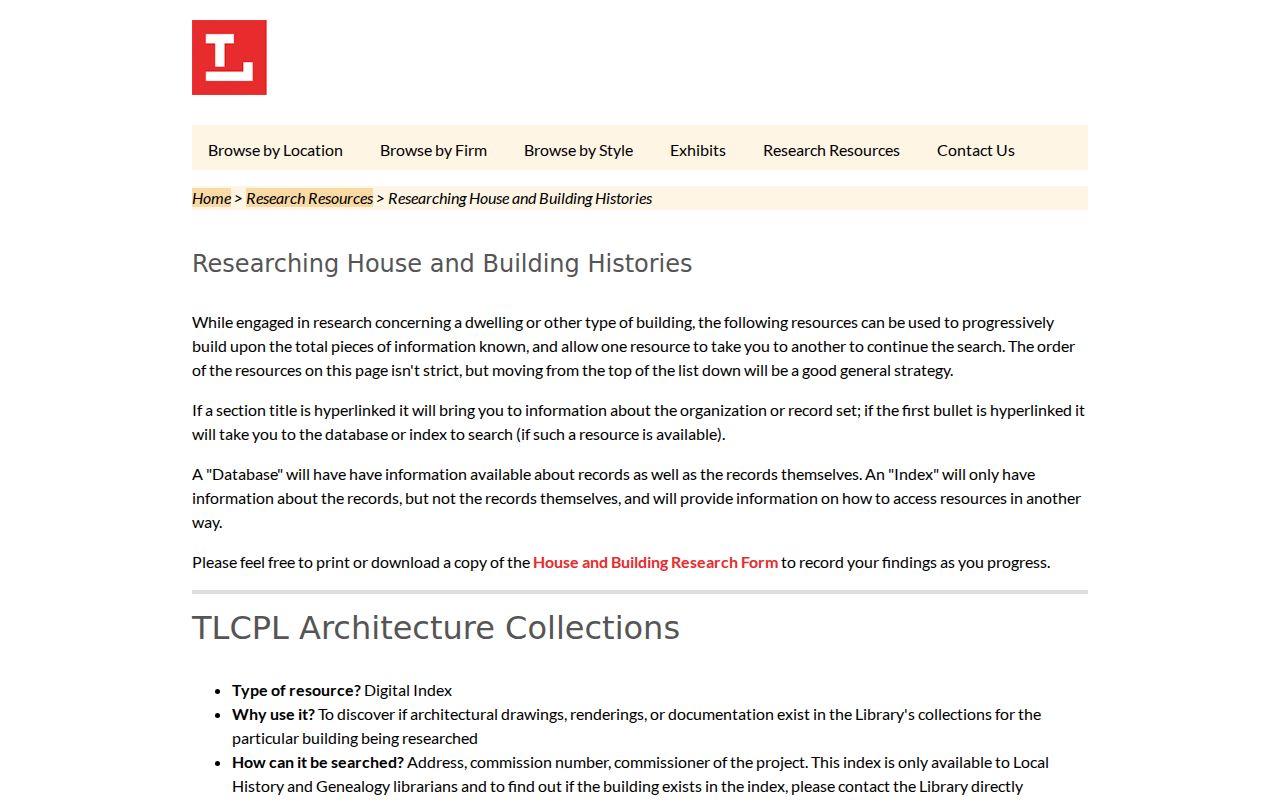
That connection is useful after a directory name or address is found, because each source answers a different historical question.
Toledo Directory Formats at TLCPL
The physical format changes at an important boundary. Toledo directories from 1858 through 1935 are on microfilm, and volumes from 1936 forward are books at the Main Library. All regular runs have alphabetical people and business listings. The library records a street-and-address index only from 1910 forward, which is why a known address has a different research path in later volumes than in early ones.
| 1858 | The first documented Toledo directory, Polk's Toledo City Directory, is a 294-page work credited to H. L. Hosmer and W. H. Harris. |
|---|---|
| 1910 | TLCPL documents alphabetical street and address listings from this point forward. |
| 1858-1935 | Toledo directory run available on microfilm at the Main Library. |
| 1936-present | Toledo directory run held as books at the Main Library. |
The Main Library is at 325 Michigan Street in Toledo. Local History and Genealogy is on the third floor, with research help and one-to-one appointments at 419-259-5233. Collection-room rules apply, and rare or manuscript items use the Blade Rare Book Room with its own handling procedures. Microfilm may be printed for the posted per-page charge or scanned to a flash drive.
Reading Lucas County City Directories
A careful reading begins with what TLCPL has verified, not with assumed columns. The regular local runs provide alphabetical people and business listings, and later volumes provide alphabetical street and address listings. Early volumes can add organizations, churches, and companies. These are collection capabilities, so a name found in a listing is a lead to compare with another year or record, not a statement about every person associated with the address.
| Alphabetical listing | People and businesses are listed throughout the regular Toledo run. |
|---|---|
| Street and address listing | Available from 1910 forward, creating the documented address-to-name or business path. |
| Early supplemental entries | Churches, organizations, and companies may supply additional names or neighborhood context. |
| Line-by-line fields and abbreviations | Not reliably rendered in the inspected research. Inspect the digitized image or an in-library volume before transcribing or interpreting them. |
- Alphabetical listing
- The name and business arrangement verified for the regular Toledo directory run.
- Street-and-address index
- The alphabetical street and address portion documented by TLCPL from 1910 forward; it supports a known-address historical check.
- Abbreviation key
- A volume-specific guide to its printed shorthand. The researched text did not verify a particular key or its fields, so read the actual volume before assigning a meaning.
Lucas County's 1858 Directory Caveat
The earliest local volume deserves its own warning. Ohio Memory's digitized 1858 Toledo city directory is a 312-scan compound object, making it a valuable original image rather than a secondhand description. Yet the documented historical limitation matters more than its age: a 1946 Northwest Ohio Quarterly account says the first issue lacked house numbers and compilers often could give only blocks.
The digitized 1858 directory object is the source behind this historical volume.
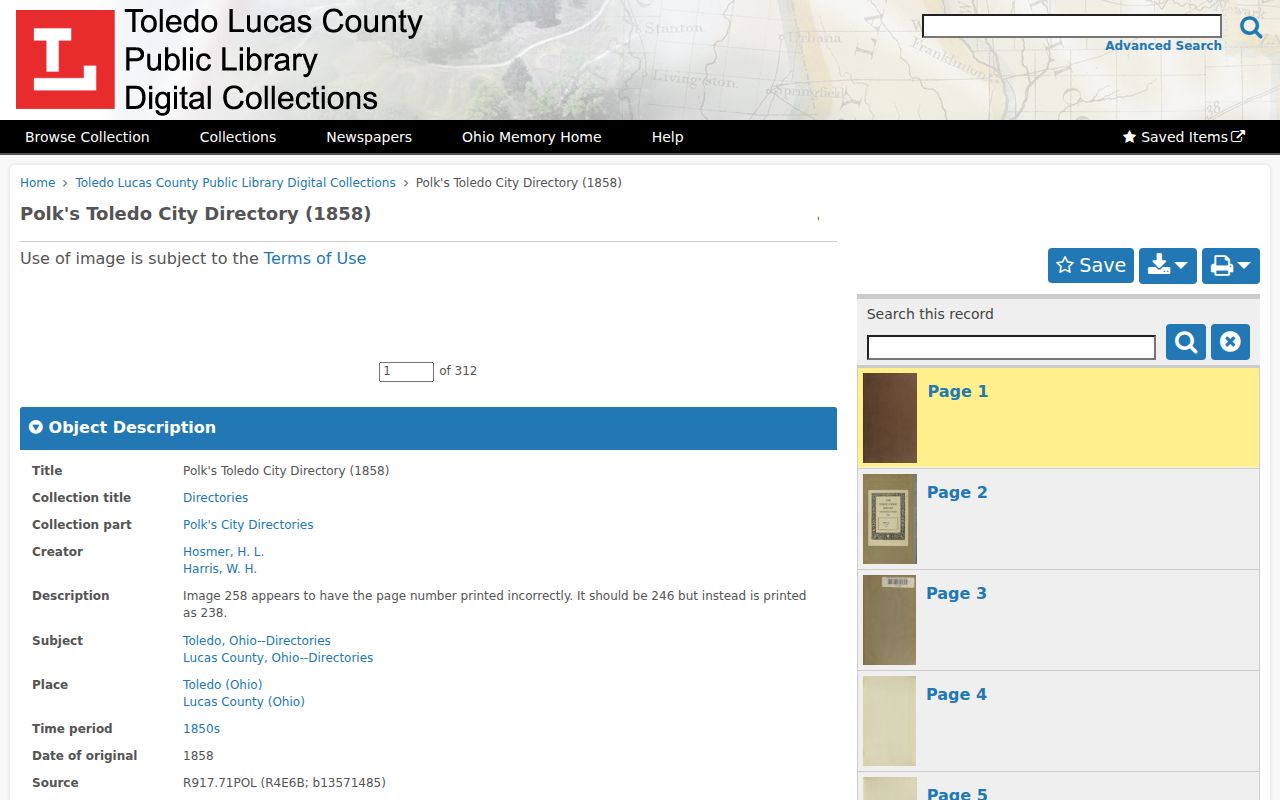
For an 1858 name, a block, ward, nearby business, plat, or organization entry may be the useful bridge, rather than a modern-style street number.
Polk and Blue Book Directory Records
The Polk's Toledo City Directory catalog record is specific: it describes a named series covering 1858-1986 and identifies in-library use. Its 2021 edition is described as six directories in one, including alphabetical and business portions, telephone and street guides, wireless, and demographic portions. That catalog description should stay separate from TLCPL's wider statement that Toledo directory holdings continue to the present.
Hubbell's Blue Books are a different collection. TLCPL describes their 1888-1910 span and notes keyword, name, and address searching, with possible school and club context. They can support a family-history question, but they do not replace the chronological Toledo directory run.
The Polk catalog record identifies the named series and its library-use limitation.
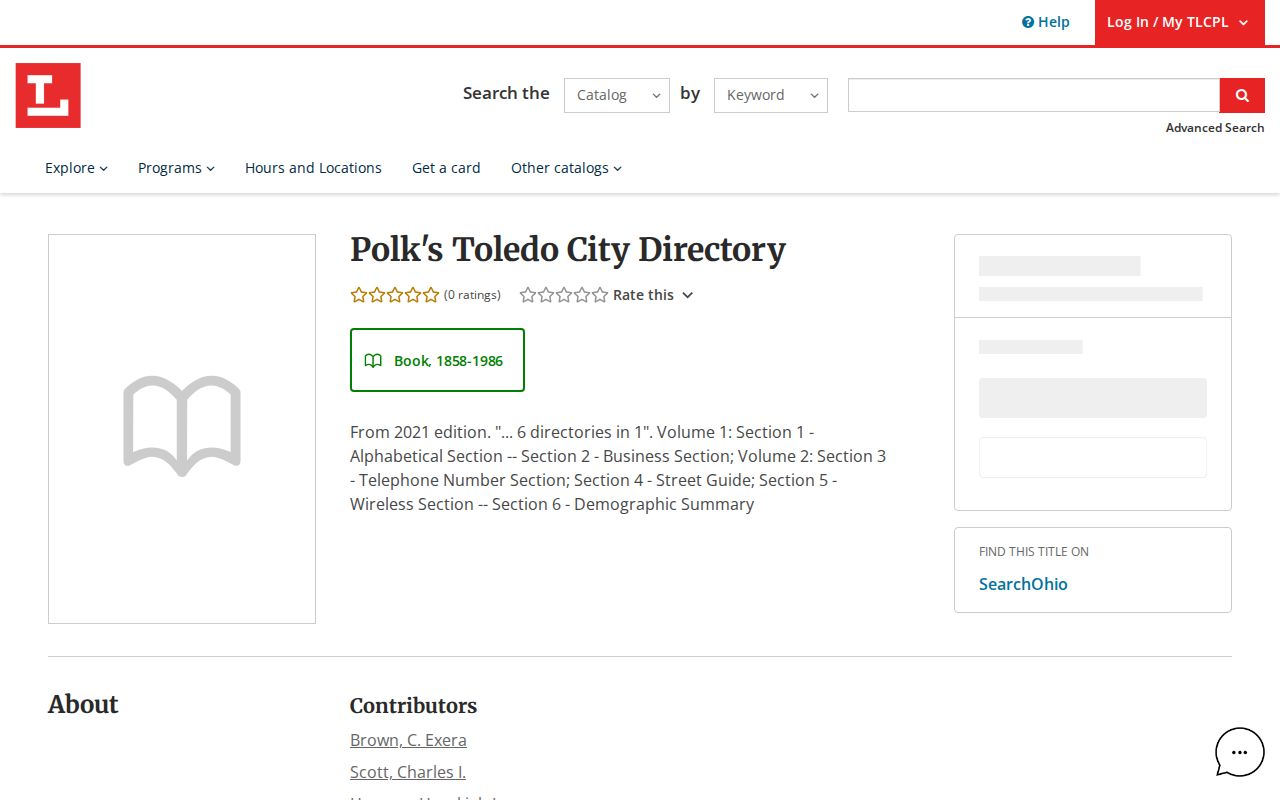
Keeping the series name, year range, and access channel in the research notes prevents a catalog entry from becoming an unsupported blanket claim.
Lucas County Digital Directory Sources
TLCPL's Local History and Genealogy digital collections report more than 36,000 resources and offer searchable collections and a map browser. The library gives a useful search lesson: an exact address can fail while the street name finds a relevant block image. This is especially helpful when old numbering, a street-name change, or an image catalog's wording does not match an address typed today.
The TLCPL digitized books and directories collection provides the online collection route.
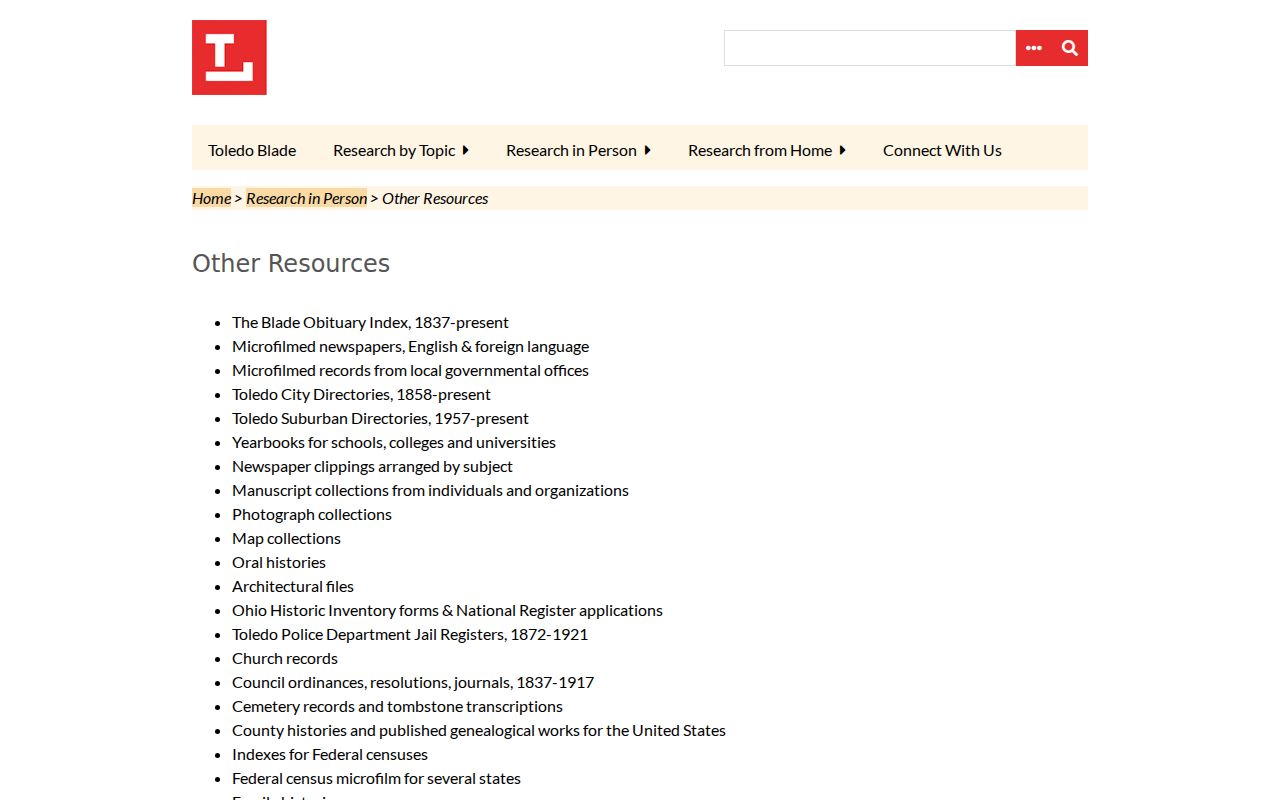
Digital access does not mean every year or every companion source is online, so the Main Library shelf and microfilm remain part of the same research trail.
Tracing Lucas County City Directory Households
A household trail works best as a sequence of checked appearances, not as a quick conclusion. Start with the alphabetical listing in one year. For a 1910-or-later question, compare the street-and-address index in that same volume, then examine adjacent years for spelling, initials, business, and address changes. The directory record is one layer; a property record or deed is a different layer and should not be assumed to identify the same people.
- Find the name in a Toledo directory year and record the spelling, initials, business, and address exactly as printed.
- Check the next and prior available directory years for moves, name variants, and changed business details.
- For 1910 and later, consult that year's street-and-address listing to test the known address from the other direction.
- Pair the directory year with the closest released federal census, recognizing that census schedules follow the federal 72-year release pattern.
- Use the TLCPL obituary index or a recorded property source to pursue a later endpoint, while keeping each source's limits clear.
A disappearance can reflect a move, death, changed listing practice, or an unsearched variant. The Blade obituary index, which TLCPL reports from 1837 forward, searches name, year of death, and address and points researchers to microfilm or the library's scan procedure. It is a pointer to an obituary, not the obituary itself.
Lucas County Directory Jurisdictions
Toledo is the county seat and the main municipal directory setting, but Lucas County has other cities, villages, and townships. A Toledo Building Inspection record or Toledo city directory should be labeled Toledo-specific when it appears in a countywide search. County offices such as the Auditor, Recorder, Treasurer, Probate Court, and Board of Elections have a different jurisdiction from city services. That distinction matters for addresses in Sylvania, Maumee, Oregon, Waterville, Whitehouse, Holland, and unincorporated areas.
For a very early community or property question, TLCPL's Land Records Collection includes 1825 deeds, Port Lawrence records from 1833-1852, Toledo lot-division records, and early assessment material. The University of Toledo's Canaday Center is another appointment-based special-collections route for Toledo and Northwest Ohio people, organizations, and local history sources. Both repositories can have access restrictions.
Research tip. Write down the city, village, township, and county attached to each source. A historic name match becomes much stronger when the jurisdiction and year also agree.
Lucas County Directory Access Paths
When an online search stops, TLCPL offers a practical fallback: visit Local History and Genealogy at Main Library, ask about the applicable microfilm or book run, and use its research-help channel. Rare materials have reader and handling rules. The library also lists eligible small unbound-material scanning and a stated digitization turnaround, both subject to its current rules. That access path is preferable to filling a missing year with a guess.
Historical directories work alongside maps, block cards, newspaper indexes, and official land records. For a current street-keyed property question, use the separate Lucas County by-street directory; for a past-address chain, use Past Residents. These searches answer different questions from the historical directory shelf.
Note: Verify a volume's availability, access rules, and copying options with TLCPL before making a special trip.