
Starting a Lucas County Resident Search
Lucas County keeps no single roll of every person at every address. The useful trail changes with the question. AREIS, the Auditor's Real Estate Information System, is the address and ownership starting point. The Recorder holds the permanent land-document layer. The Board of Elections and court systems may answer a different, limited question about a named person. Historical city directories and obituaries are usually stronger when the goal is to place a household in an earlier era.
Each result needs its own date and meaning. A tax owner is not automatically every person at a property. A deed confirms a recorded transfer, not a current household. A case entry can show a party connection, but it is not a current-address statement. The Lucas County residents directory works best when a reader writes down the source, date, role, and record number before moving to the next source.
- Search the Lucas County AREIS property system by the address, owner, parcel number, or assessor number that is already known.
- Save the parcel and legal-description details, then use the Recorder route for the transfer or recorded document behind a property result.
- For a named person, use the Lucas voter information search or the relevant court index only for the question each official record can answer.
- For an earlier address, check Toledo-Lucas County Public Library directory holdings and its obituary or house-history paths.
- When the online trail ends, ask the office that created the series for an inspection, copy, or focused Ohio public-records request.
Note: A focused request identifying a parcel, instrument, case, or time range is easier for a Lucas County custodian to locate than a request for everything about a person.
Lucas County Custodians Behind Resident Records
The offices below hold different pieces of the Lucas County resident trail. The Recorder keeps land instruments permanently in archival form. The Auditor manages the property, valuation, parcel, and mapping system. The Board of Elections maintains registration information subject to statutory exclusions. These are separate records, so agreement between them is useful and a conflict is a reason to verify rather than fill in a gap.
Lucas County Recorder
One Government Center, Suite 700
Toledo, OH 43604
419-213-4400
Lucas County Auditor
One Government Center, Suite 600
Toledo, OH 43604
419-213-4406
AREIS property search
Lucas County Board of Elections
3737 W. Sylvania Avenue, Suite 121
Toledo, OH 43623
419-213-4001
AREIS Fields for Lucas County Addresses
AREIS separates the parts of a street address instead of treating the whole address as one free-form label. Its visible public navigation includes address, owner, parcel number, assessor number, advanced, county map, and multi-year modes. The system was displaying a maintenance notice during research, so a temporary screen failure should lead to an Auditor contact or later retry, not a conclusion that no parcel exists.
| AREIS field or mode | How it works | Useful Lucas County caution |
|---|---|---|
| Street # and Street Name | Text fields for a precise address search | Use Direction and Suffix separately where needed. |
| Direction, Suffix, Unit | Optional street components | They narrow a result but do not replace the number and street name. |
| Owner | A separate name-to-property mode | The displayed owner and mailing address are tax-roll fields, not a full occupant list. |
| Parcel / Assessor # | Separate identifier modes | These help bridge a property card to recorded land documents. |
| County Map and Multi-Year | Map and assessment-era routes | Tax-map lines are not a legal survey. |
The AREIS address screen shows the county's property-search routes. Its parcel card can point to prior owners, building attributes, assessed taxes, aerial images, maps, zoning, and transfer history. The card's property address, owner mailing address, and legal description answer different questions.
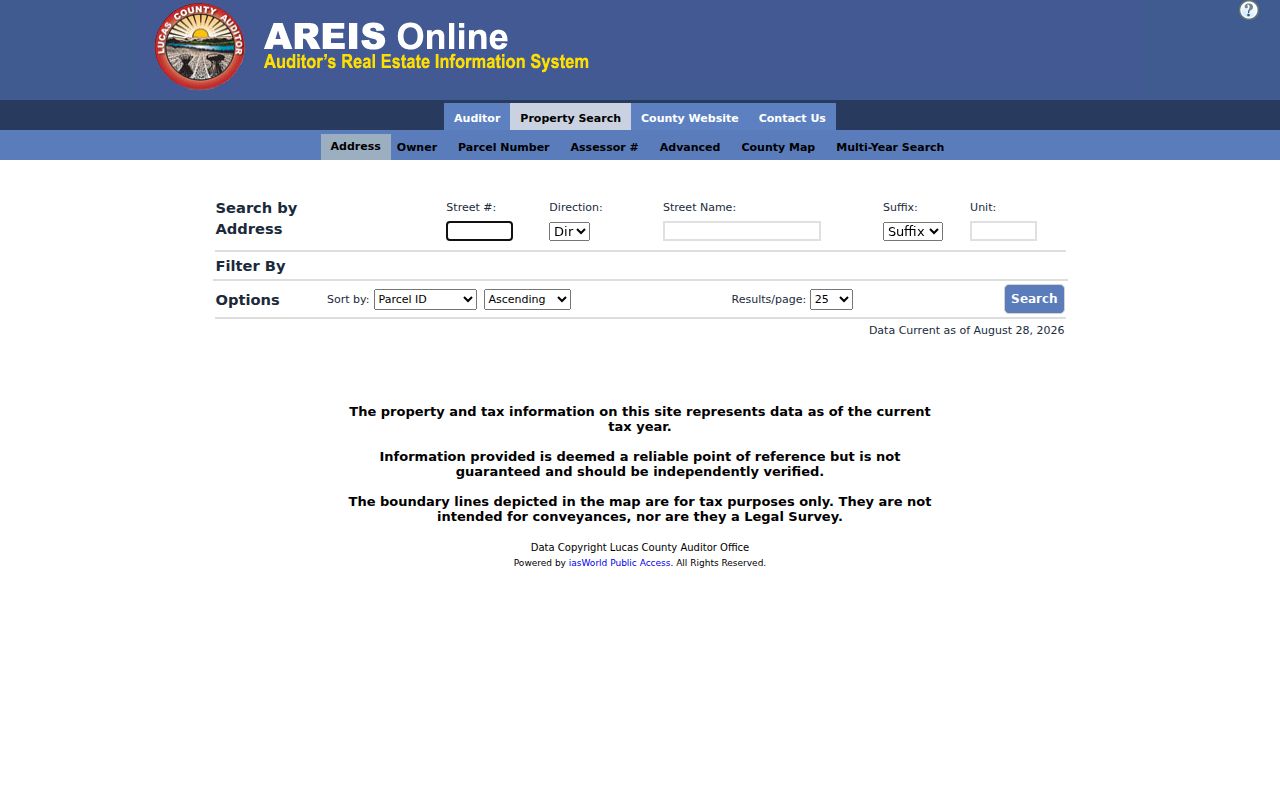
Use the separate modes to record a parcel consistently before carrying a name or legal description to a different Lucas County custodian.
Following Lucas County Property Into Deeds
A parcel result is a starting point, not the last word. AREIS transfer information can provide a buyer, seller, date, price, deed type, and short legal-description trail. The Recorder's online-recordings route is described locally as supporting owner name, organization name, and limited date-range searching. Its live form did not reliably expose every field during research, and no verified online-index start year was published.
The Recorder says imaging began April 14, 2003 and its land records are permanently retained in archival form. For an older or missing online item, use the counter, phone, or the appropriate copy-request channel rather than treating an online search as the complete archive. A grantor is the party transferring an interest; a grantee is the party receiving it. Those roles matter because a mortgage or lien is not itself proof of ownership.
- Parcel
- A tax and mapping unit used by the Auditor to organize one piece of real estate.
- Legal description
- The lot, plat, subdivision, or other formal land identifier that can connect an AREIS card to a deed without relying on a street number.
- Index
- A finding tool that identifies a recorded item and its placement; the image or certified copy may have a separate access path.
- Criss-cross directory
- A historical directory arranged by street or address rather than only by personal name.
The Lucas County Recorder provides the official land-record channel. Assisted copies are posted at $2 per page, while its current fee page should be checked directly for the right kind of copy or certification.
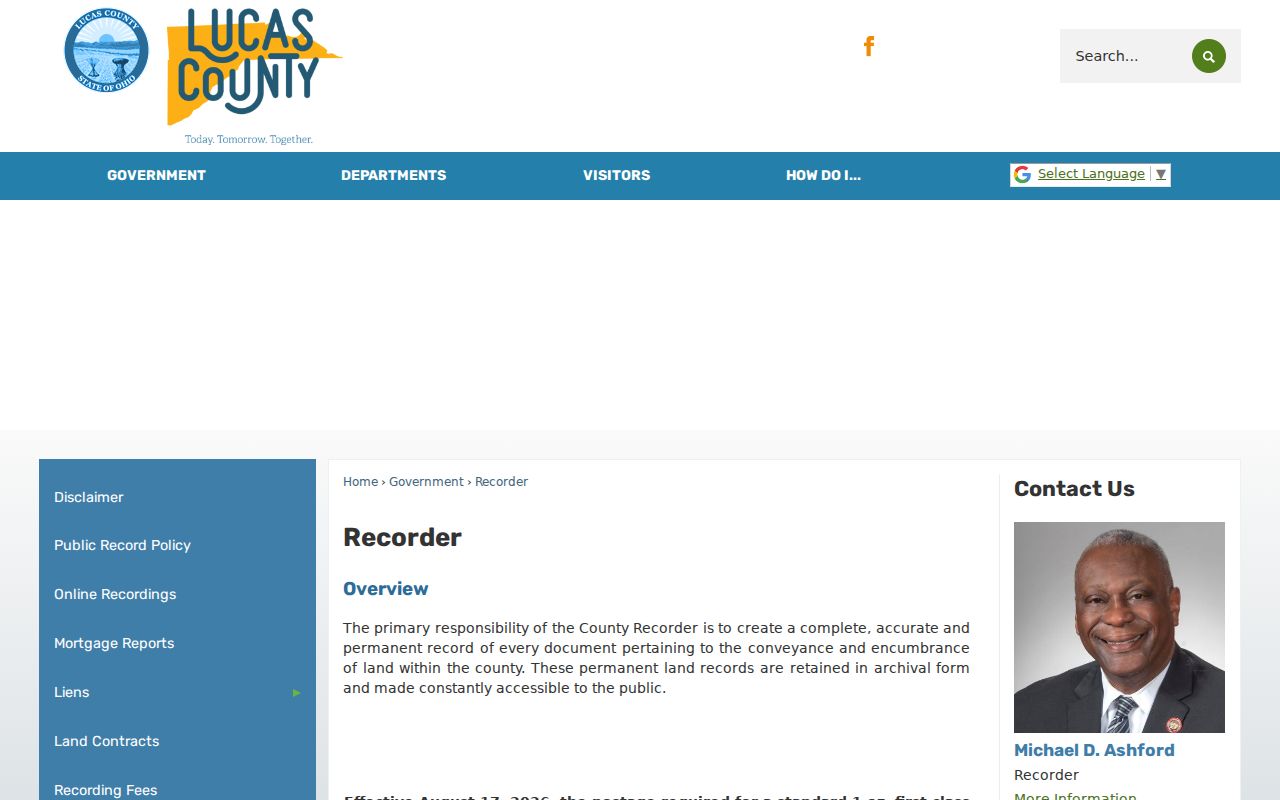
A recorded instrument number, document type, date, and party roles make a later Recorder request far more specific.
Current Lucas County Resident Record Sources
These sources are directory-like because they connect people, parcels, filings, or registration records. They do not create the same kind of evidence. A property card is strongest for a parcel and tax owner. A voter result is a registration record with protected categories excluded. A Recorder item documents recorded parties. Court and state portals can confirm their own case, business, or credential details without establishing a household.
| Lucas County source | What it can show | Custodian | Access path |
|---|---|---|---|
| AREIS property card | Owner, mailing and property fields, parcel, tax and transfer clues | Auditor | Public property portal |
| Voter information search | Registration-related public information | Board of Elections | Individual lookup and lawful records routes |
| Recorded land index | Grantor, grantee, instrument, and title trail | Recorder | Online-recordings, counter, or copy route |
| Common Pleas and municipal dockets | Named party and case-status information | Clerk and court | Separate court systems and file rooms |
| Ohio business and license portals | Official entity or credential information | State agencies | State online tools |
When the goal is to verify one named person instead of trace an address, the Lucas County resident lookup route keeps the property, voter, court, and historical records in their proper roles.
Lucas County Voter Records Have Limits
The local voter form requires a last name and first name. Ohio's statewide individual form additionally uses a county selection. A result is a registration-related record as of its update, not a ballot-choice record or a household roster. Ohio does not register voters by party. The public baseline comes from Ohio Revised Code 3503.13, which excludes sensitive identifiers, phone and email details, confidential registrations, protected-worker addresses, and other information closed by law.
| Local lookup field | Type | Research-confirmed use |
|---|---|---|
| Last Name | Text, required | Use legal or former-name variants only where relevant. |
| First Name | Text, required | Narrows the Lucas County individual query. |
| Submit | Button | Sends the local search. |
| Reset | Button | Clears the form. |
Ohio Safe at Home participants can use a substitute address, and confidential voter records are omitted from public lists and databases. A Board request can be appropriate for a lawful, specific public-record question, but the law does not support a casual street-by-street enumeration of nearby voters.
Note: Ohio's statewide snapshot channel has date and county controls, but its public-file availability does not erase the exemptions that protect confidential registrations and sensitive fields.
Lucas County Court Names Need Context
Lucas County Common Pleas records and Toledo Municipal Court records use separate systems. Common Pleas directs users to its Online Dockets information and Justice Case Access, while the municipal gateway separates civil from criminal and traffic case information. A case hit can help distinguish people with similar names when its date, party role, and case number line up with other records. It never replaces a clerk's certified record or proves a person currently lives at a displayed address.
Smart Search in the Common Pleas Navigator manual accepts a case number, warrant number, or party name in last-name, first-name form. The available search-type choices include party name, business name, attorney, case number, judicial officer, nickname, and warrant number. Restricted parties do not appear online, and pre-1998 materials may require the court's internal or office route.
The Lucas County Clerk of Courts is at 700 Adams Street. Its civil file room is on the first floor and its criminal file room is on the third. Requesting a case number, division, date, and exact document gives staff the detail needed to locate a public file.
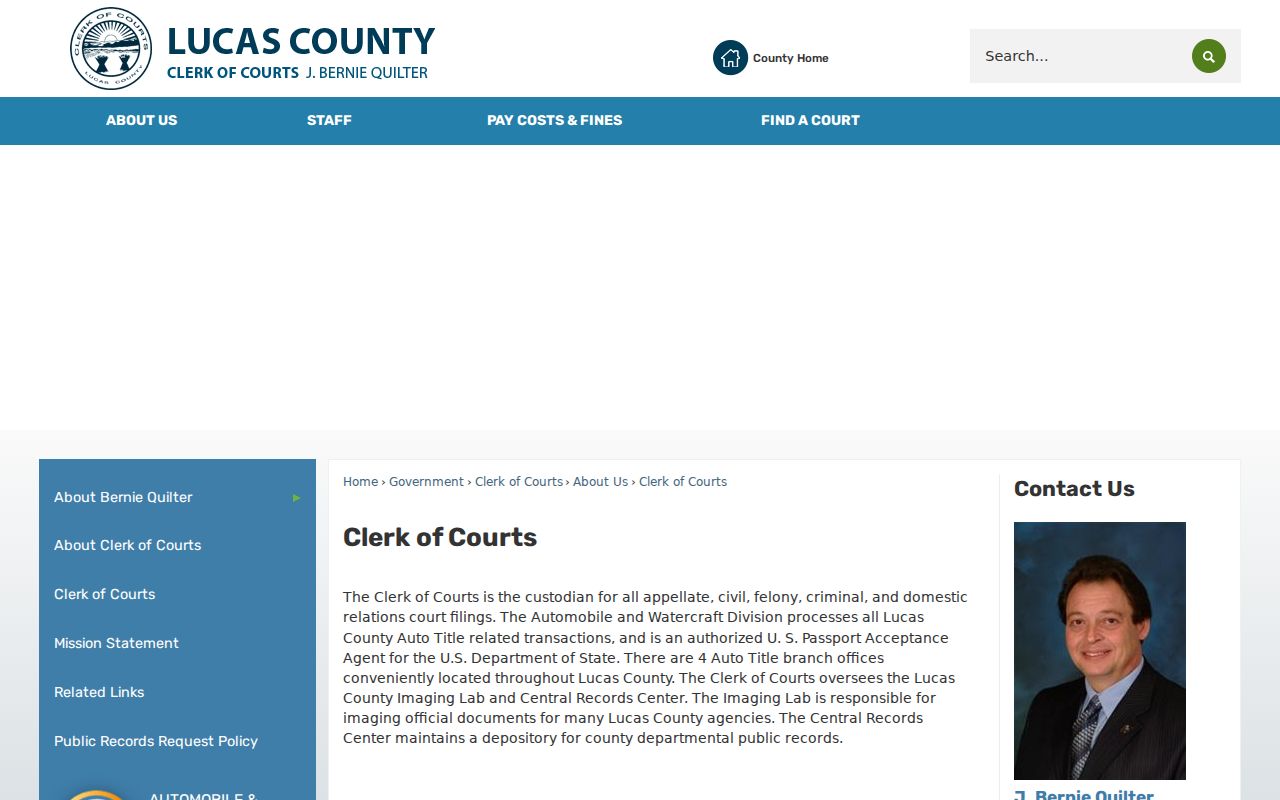
The Clerk landing page is the appropriate fallback when a docket image, account-gated result, or older case cannot be read online.
Historical Lucas County Resident Directories
For prior households, the Toledo-Lucas County Public Library Local History and Genealogy Department has Toledo city-directory holdings from 1858 to the present. The format changes by era: 1858 through 1935 volumes are on microfilm, while 1936 to the present are books at Main Library. Alphabetical people and business listings occur throughout the run. Street and address indexes begin in 1910, which makes a later address-to-person search much more dependable than one in the first volumes.
The 1858 directory is a useful local story with a practical warning. It lacked reliable house numbers, so an early entry may locate a block or network rather than a modern street number. That is not a failed search. Pair the name or block with a plat, legal description, church or organization listing, and then move forward through later volumes. The full collection route belongs with the Lucas County city directories.
TLCPL's local-history digital collections report more than 36,000 resources. The Library's building-research guidance connects city directories, maps, block cards, Recorder sources, and obituaries for a careful historical trail.
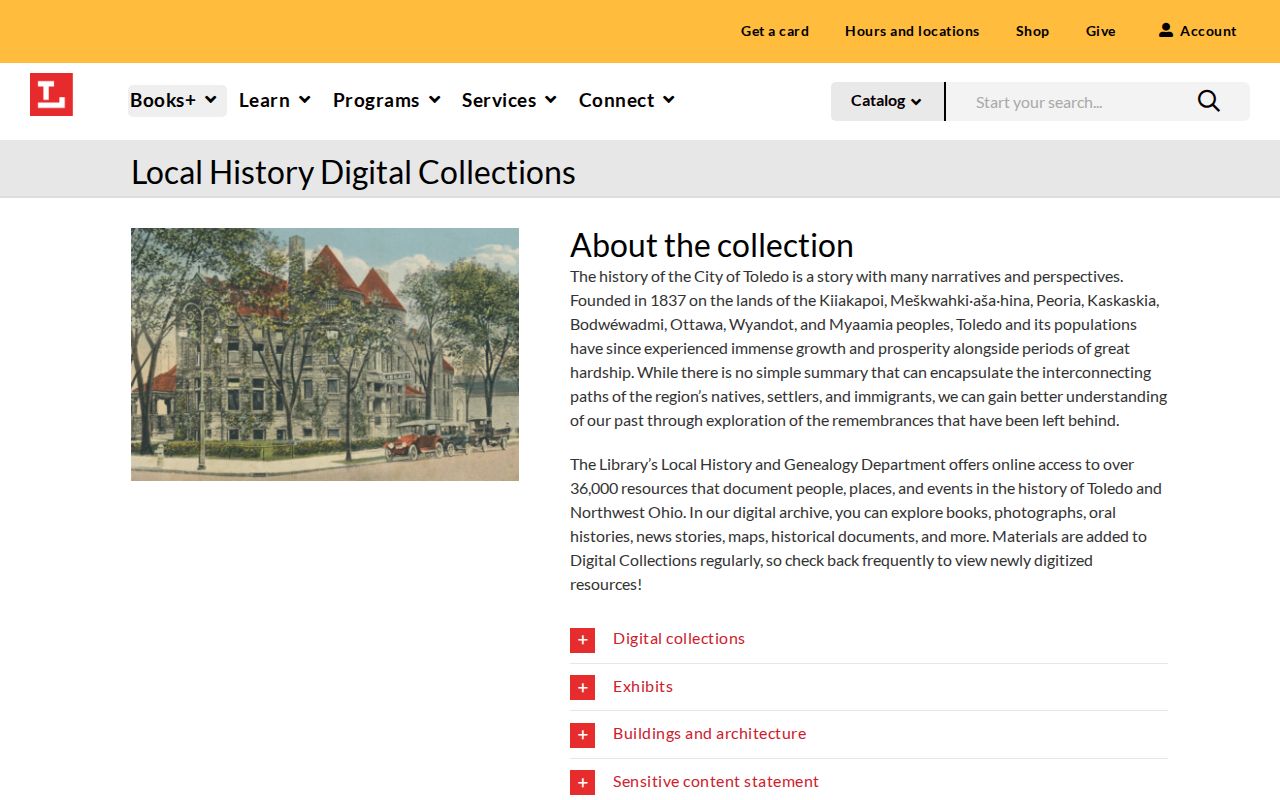
Library records often supply the time period that a current property card cannot, but they still need an era-specific reading.
Ohio Sources That Add a Lucas County Clue
State resources can corroborate a limited part of a Lucas County record trail. Ohio eLicense is a public verification system for credentials issued by 24 boards and agencies. Its guidance recommends a last name, first initial, and board, or a full license number. The public detail can show a licensee name, status, board, license type or number, dates, and city and state. That is credential evidence, not proof of a home address.
The Ohio eLicense lookup is the official credential channel. Its result may resolve a stated professional credential when a name is shared by several people, but it should not be used to infer a current household.
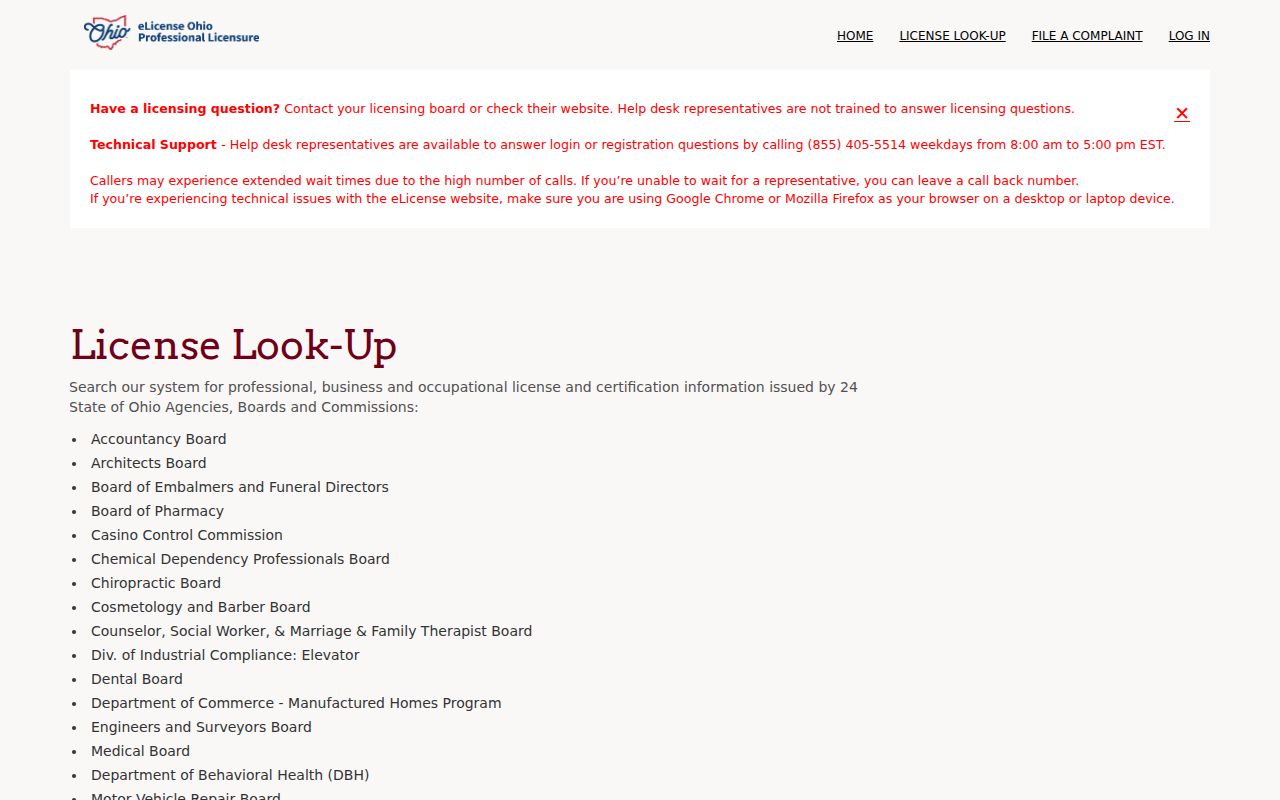
Use the board, status, and issued credential details as an additional official fact, then keep it separate from property or voter evidence.
Lucas County Business and Filing Clues
The Secretary of State business hub can identify an entity filing, agent, or business connection. The UCC portal can be searched by financing statement number, debtor name, or secured party name. An instrument listed in a UCC result documents a transaction filing, not land title or current residence. Preserve the official identifier and date if it helps resolve a separate recorded-document or estate question.
A business or professional record works as a narrow cross-check. It can help separate a company from an individual with a similar name, yet it must not be promoted into an address or household conclusion. The original Recorder, Auditor, Clerk, or state licensing custodian remains responsible for the fact its own record carries.
The Ohio business-services hub provides the official business-search and filing path, including UCC links and a route for reporting fraudulent filings.

Keep an entity's filing name, agent, and dates in the business-record column of a search note rather than merging them with property or resident facts.
Lucas County Vital and Probate Pathways
Birth and death certificates use an official registrar route, while marriage licenses and estate records have their own custodians. The Toledo-Lucas County Health Department issues certified Ohio birth and death copies through counter, phone, mail, and online channels. Its research-backed local price is $25 per certified copy. Probate Court, not the Recorder or state vital office, is the local route for Lucas County marriage licenses and estate questions.
Historical research follows a different path. TLCPL points researchers to FamilySearch material for Toledo and Lucas County births, marriages, and deaths in the documented historical runs, as well as library obituary resources. These are index and collection routes, not substitutes for a certified record. Original adoption files are confidential under Ohio law, so an adoption-related question belongs with the official statutory channel rather than a general public name search.
The Ohio Vital Statistics gateway is a state starting point. For a Lucas County event, verify the present ordering process with the local registrar or state before supplying sensitive application information.
A certificate request has its own form and eligibility details, so a library index should be treated as a lead, not a certificate.
Lucas County Public Record Requests
Ohio's Public Records Act, ORC 149.43, gives any person a right to inspect or copy a public record unless a specific exception applies. An office normally cannot require a name, a purpose, or Ohio residency. Inspection and copies must be prompt or within a reasonable period, and the charge for copies is limited to the cost of the selected medium. A written denial requires a written explanation and legal authority.
Use that route with the agency that created the record. The Lucas County Records Center stores more than 47,000 boxes and 26,000 microfilm rolls for county offices, but it expressly cannot take a general-public request. Ask the Recorder, Clerk, Probate Court, Board, Auditor, or City department that owns the series whether an offsite pull, counter inspection, copy, or certification is available.
The Ohio Public Records Act explains the access baseline. It does not require a custodian to create a new list or disclose sealed, confidential, protected-address, juvenile, or adoption material.
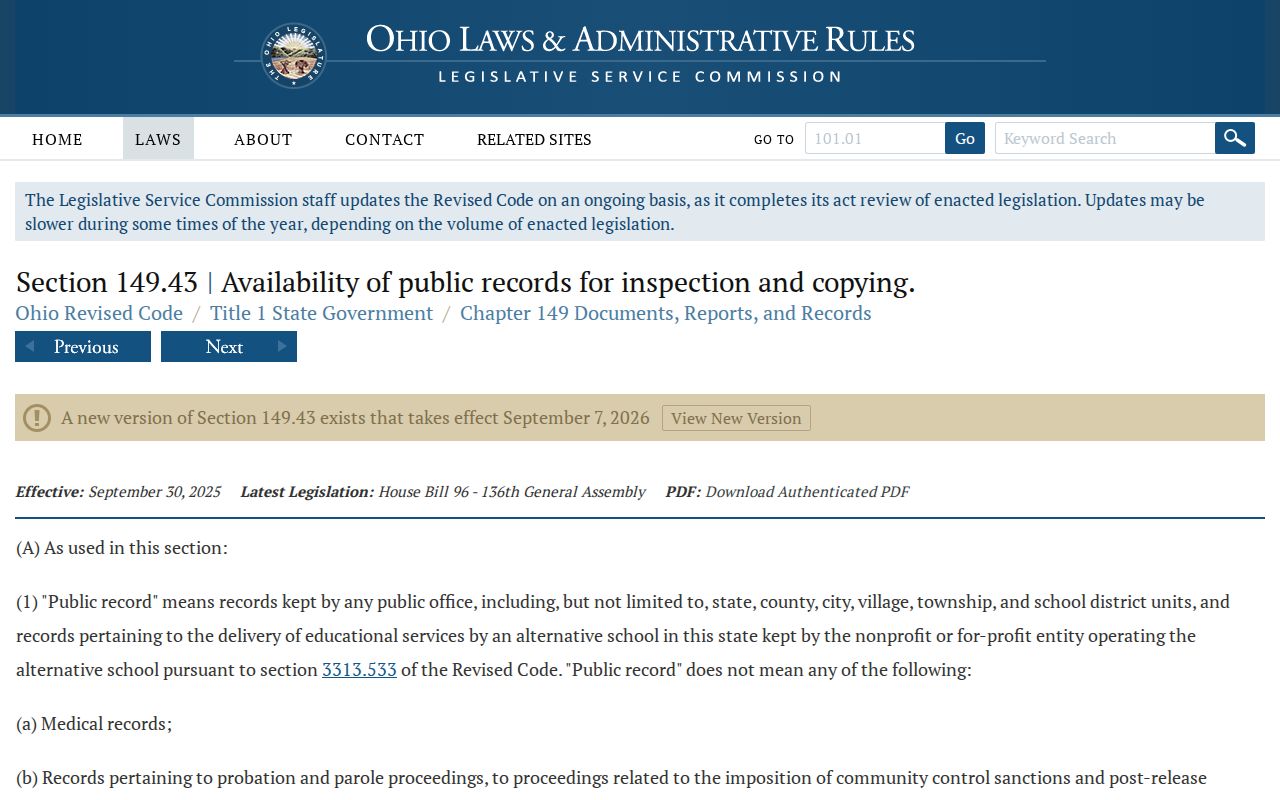
The responsible office remains the place to confirm the public version of a particular record and the access method for any copy.
Lucas County Record Safety Boundaries
Ohio law protects confidential voter registrations, Safe at Home substitute-address participants, protected personal identifiers, sealed files, and other exempt material. A missing result can be a legal boundary, not an error to work around. The right response is to check the appropriate custodian's procedure or ask what public version of a record exists. Do not substitute a mailing address, an old directory listing, or a case display for a current location.
Commercial people-finder products may combine stale or mismatched claims and charge for access. They are not a substitute for the original Lucas County or Ohio custodian. Official records also change, which is why a dated result, a record number, and direct confirmation matter more than an unverified profile.
Note: A property card, voter result, directory entry, or case result may each be public in part while still leaving key facts confidential or unavailable.
Lucas County Searches That End at a Custodian
Some official sources lead to a specialized channel instead of a searchable list. Ohio's Department of Rehabilitation and Correction search covers people in state prison, under DRC supervision, or judicially released. It does not replace the Lucas County jail's rolling booking summary, which is not a confirmed historic name-search roster. Status displays and last recorded locations should never be transformed into a claim about where someone is now.
County records also have different geographic limits. Toledo permit records concern the city, not every village or township in Lucas County. AREIS, the Recorder, Common Pleas, Probate, and Board systems are county resources. A suburban address may fit the county trail but not the City of Toledo's municipal systems. Naming the correct custodian at the first step prevents a long search in the wrong jurisdiction.
The Ohio DRC offender search shows the state system's scope and status choices. Use the responsible local or state office for any official clarification.
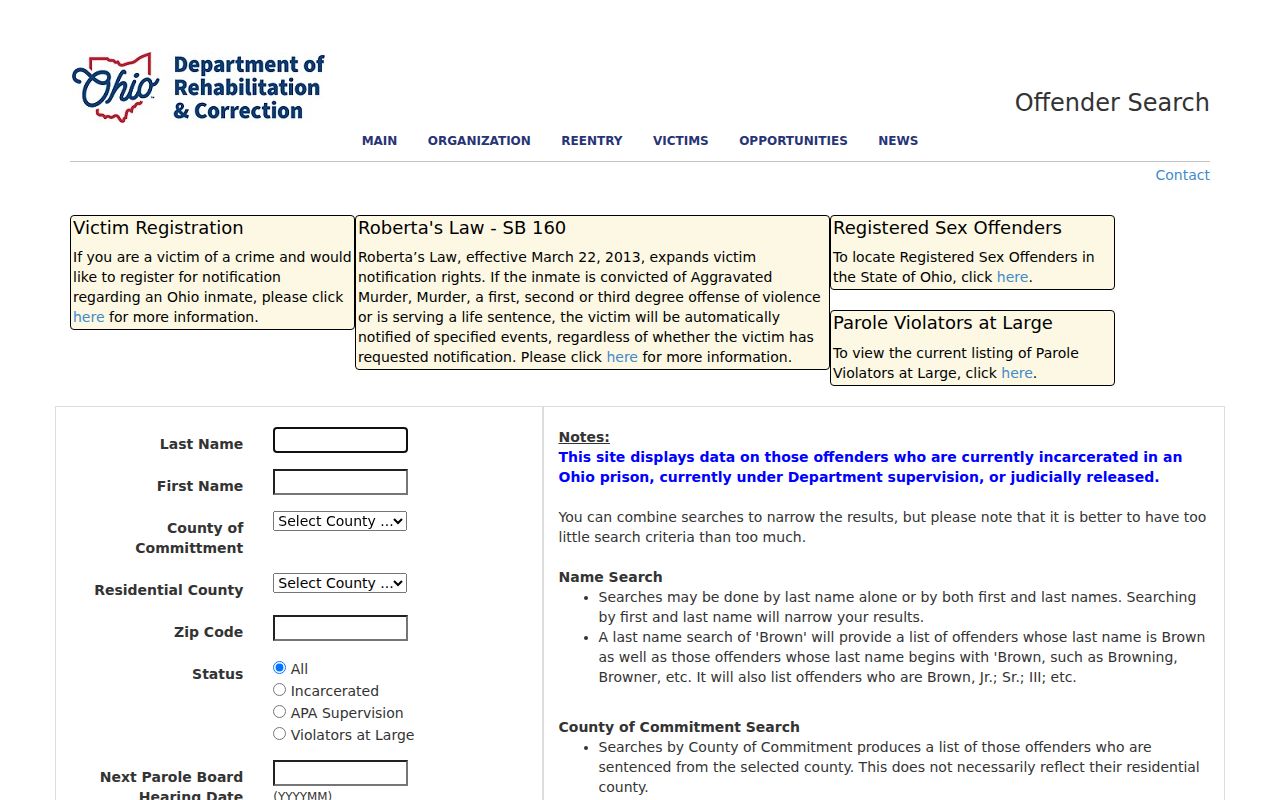
Separating state, county, and Toledo-only records keeps the Lucas County resident trail accurate.